What is a racecard?
 Whether you are a regular racegoer or a once-a-week, stay-at-home punter, the racecard is arguably your most important source of information. On the racecourse, a racecard, which can be bought inexpensively, or may be included in the price of admission, takes the form of a printed booklet, akin to a theatre programme. In this case, the racecard contains information about the racecourse, the races to be run and the runners in each race.
Racecards are also printed in industry publications, such as the ‘Racing Post’, and in other daily newspapers. In this case, the list of runners and riders is printed, race-by-race, and includes key information, such as the saddlecoth number and name of each horse, its age, the weight it is set to carry, the name of its jockey and trainer and the colours worn by the jockey. A brief synopsis of the recent form of each horse is included, as a series of form figures alongside its name, which indicate its finishing position in its last five or six races. Of course, form figures alone may not provide all the information you need to make an informed betting decision, but may, at least, provide some quick, simple clues to where you should focus any further analysis.
 Historically, the term ‘sweepstakes’, or ‘stakes’ for short, was used to describe a horse race in which all, or at least the vast majority, of the prize money comprises entry fees, declaration fees and forfeits paid by owners. Nowadays, this description is somewhat outdated and the term ‘stakes race’ more commonly refers to a horse race classified in the upper echelon of Flat racing or, in other words, a Listed or Group race.
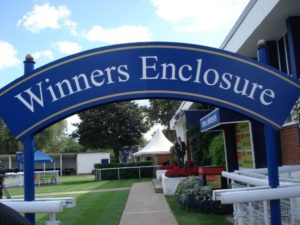 Strictly speaking, the Winners’ Enclosure is, as the name suggests, the designated area of a racecourse to which winning and placed horses return after passing the winning post to be reunited with their owners, unsaddled and, of course, to receive the adulation of the racing public. The winners’ enclosure may be incorporated into the Parade Ring, around which horses walk before the start of a race, as may the Unsaddling Enclosure, in which unplaced horses are unsaddled and washed down afterwards.